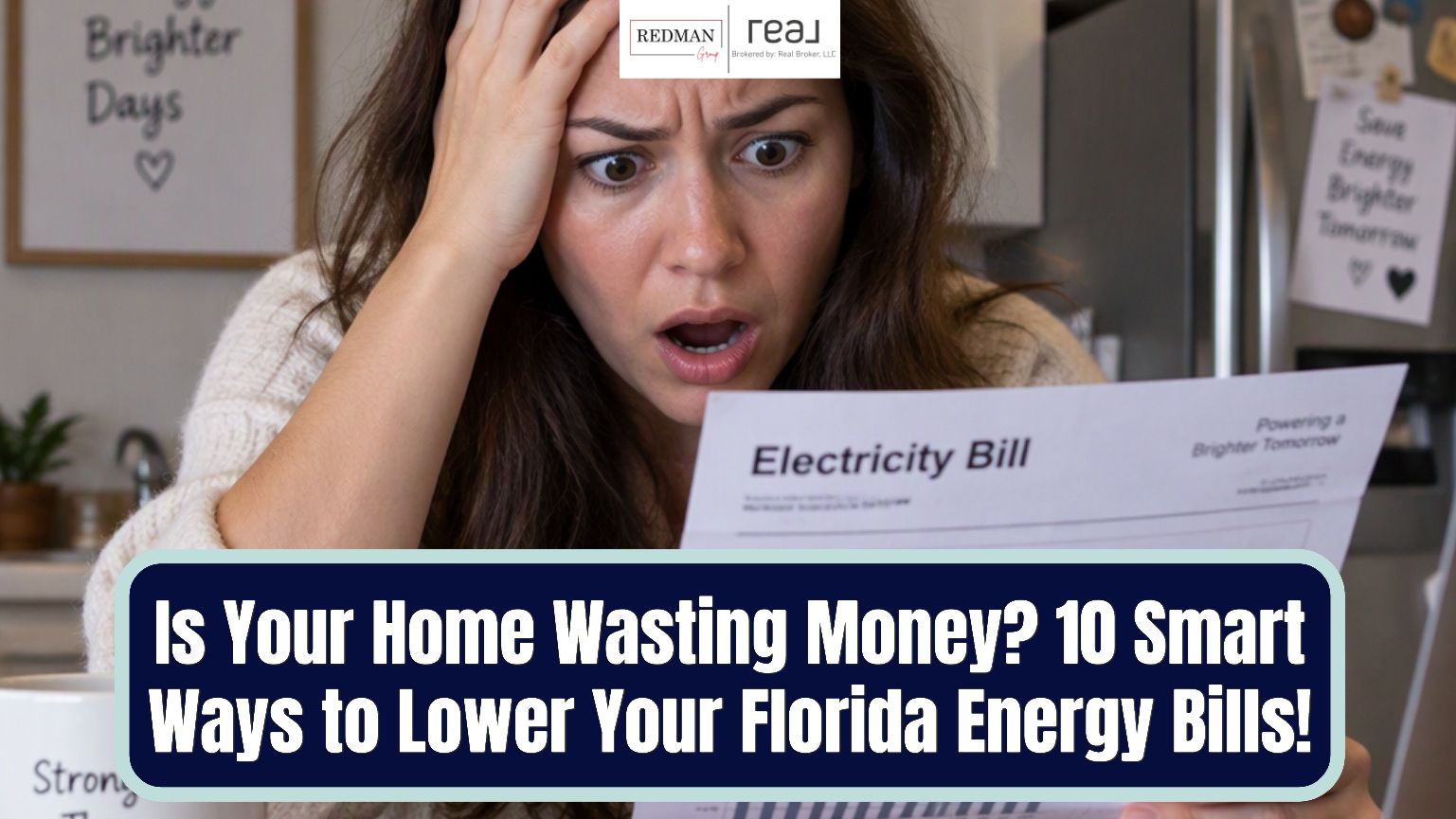
Is Your Home Wasting Money? 10 Smart Ways to Lower Your Florida Energy Bills!
Living in Florida certainly has its advantages.
Beautiful sunshine.
Mild winters.
And the ability to enjoy our patios and pools almost all year long.
But there's one thing most Florida homeowners could happily do without.
Those summer electricity bills!
When the air-conditioning is working overtime, the pool pump is running and the Florida sun is beating down on the roof, keeping your home comfortable can become expensive.
And here's something worth remembering.
You might be paying to cool air that's escaping through gaps, poorly sealed ductwork or insufficient insulation.
The good news is that improving your home's energy efficiency doesn't necessarily mean replacing your air-conditioning system or installing expensive new windows.
In fact, some of the most effective improvements are also among the simplest.
Here are ten ways to make your Central Florida home more comfortable while potentially reducing those monthly electricity bills.
1. Start With Your Thermostat
Your thermostat controls one of the biggest energy users in your Florida home.
And even small changes to your cooling habits can make a difference over time.
The U.S. Department of Energy recommends adjusting thermostat settings when you're away or sleeping to reduce unnecessary heating and cooling.
During the summer, consider setting the temperature a little higher when nobody is home.
A programmable or smart thermostat can make this easier by automatically adjusting temperatures according to your routine.
But there's no need to make dramatic changes.
The goal is to find a comfortable setting that reduces unnecessary cooling without creating humidity problems or forcing your system to work excessively hard when you return.
Florida tip: Don't switch off your air-conditioning for extended periods without considering indoor humidity. In our climate, moisture control is just as important as temperature.
2. Seal the Gaps That Let Your Cool Air Escape
Think about how hard your air-conditioning works to keep your home comfortable.
Now imagine some of that expensive cooled air escaping through tiny gaps around doors and windows.
That's energy you've already paid for!
Check for worn weatherstripping, gaps around exterior doors and poorly sealed openings.
Depending on the location, suitable caulk or weatherstripping may help reduce unwanted air leakage.
Pay particular attention to doors leading into the garage, exterior access points and areas where plumbing or other services enter the home.
However, don't block intentional ventilation openings or make changes that interfere with combustion appliances.
A professional assessment may be worthwhile if you're unsure where the air leaks are occurring.
3. Check Your Attic Insulation
If you've ever stepped into a Florida attic during the summer, you'll know just how hot it can become.
And that heat can affect the rooms below.
Insulation helps slow heat transfer between the attic and your living space.
If your home has inadequate, damaged or poorly installed insulation, your air-conditioning may have to work harder to maintain comfortable temperatures.
A qualified insulation contractor or home energy professional can assess the existing insulation and recommend improvements based on your home's construction and climate zone.
It's also worth checking the attic access hatch, which can sometimes be overlooked.
Remember: More insulation isn't automatically better if existing moisture, ventilation or installation problems haven't been addressed.
4. Don't Overlook Your Air-Conditioning Ductwork
Your air-conditioning system might be working perfectly.
But what if the cool air isn't reaching the rooms where you need it?
Leaky or poorly insulated ductwork can waste energy, particularly when ducts run through hot attic spaces.
This is especially relevant in many Central Florida homes.
If certain rooms are consistently warmer than others, or your system seems to run constantly, ductwork may be worth investigating.
A qualified HVAC contractor can check for leakage, damaged connections, insulation problems and airflow restrictions.
Sealing and insulating ducts where appropriate can improve comfort and reduce energy waste.
And don't assume that routine duct cleaning will automatically lower your electricity bill.
Unless there's a specific problem that requires cleaning, the more useful first step may be checking the ducts for leaks and airflow issues.
5. Keep Your HVAC System Properly Maintained
Your air-conditioning system is one of the hardest-working pieces of equipment in your Florida home.
So regular maintenance matters.
Start with the basics.
Check and replace or clean air filters according to the manufacturer's recommendations.
Keep outdoor condenser units clear of leaves, vegetation and debris.
Make sure supply and return vents aren't blocked by furniture.
And arrange professional servicing as appropriate for your equipment.
A technician can check system performance, inspect components and identify developing problems before they become expensive repairs.
Don't forget the condensate drain system.
In Florida's humid climate, a blocked drain can cause water backups and potentially significant damage.
A little preventive maintenance can be considerably less expensive than an emergency repair in the middle of August!
6. Make Your Windows Work for You
Florida sunshine is wonderful.
Until it's streaming through your windows and heating up the living room!
Windows can contribute significantly to unwanted heat gain, especially those exposed to strong afternoon sunlight.
Before considering expensive replacements, look at simpler options.
Blinds.
Curtains.
Solar shades.
Or other suitable window coverings.
Closing coverings during the hottest parts of the day can help reduce solar heat entering the home.
For some properties, exterior shading or professionally installed solar-control window film may also be worth considering.
Just check compatibility with your existing glass and any manufacturer warranties before applying film.
The important thing is to manage the heat before your air-conditioning has to remove it.
7. Think Carefully Before Replacing Your Windows
Energy-efficient windows can improve comfort and may reduce heating and cooling costs.
But replacing every window in your home is a substantial investment.
And the savings may take many years to recover the installation cost.
Before committing to a complete replacement, consider whether the existing windows are actually causing significant energy loss.
Could worn seals be repaired?
Would better shading help?
Are there air leaks around the frames?
If replacement is necessary, compare products suitable for Florida's climate.
Look at solar heat gain performance, energy-efficiency ratings and any applicable impact-resistance or building-code requirements.
In hurricane-prone areas, window selection may also involve storm protection considerations.
The most expensive solution isn't always the most cost-effective one.
8. Consider Whether Your Air-Conditioning System Is the Right Size
When an older HVAC system starts struggling, it's tempting to assume that installing a larger unit will solve the problem.
But bigger isn't necessarily better.
An oversized air-conditioning system can cycle on and off too frequently and may struggle to control indoor humidity effectively.
An undersized system may run excessively while failing to maintain comfortable temperatures.
Proper equipment selection should be based on a professional cooling-load calculation that considers the home's size, insulation, windows, construction and other relevant factors.
If you're replacing your system, ask the contractor how the recommended equipment was sized.
Also compare efficiency ratings, installation costs, warranties and expected operating expenses.
A more efficient system may reduce electricity consumption, but the financial benefit depends on your existing equipment and how the new system is installed and used.
9. Don't Forget Your Pool Equipment
Here's an energy expense that's particularly relevant to Florida homeowners.
Your swimming pool!
Pool pumps can account for a noticeable portion of a household's electricity consumption.
If you have an older single-speed pump, it may be worth discussing whether a properly sized variable-speed model would reduce operating costs.
These pumps can often operate at lower speeds for routine circulation, using less electricity.
But the savings depend on the equipment, operating schedule and your pool's requirements.
A qualified pool professional can help determine suitable settings while maintaining proper filtration and sanitation.
Also check that timers, automation controls and other equipment are operating as intended.
There's little benefit in paying for equipment to run longer than necessary.
10. Get a Home Energy Assessment Before Spending Thousands
Perhaps the smartest first step is finding out where your home is actually wasting energy.
A home energy assessment can help identify opportunities involving insulation, air leakage, ductwork, cooling efficiency and other systems.
Some utility companies offer energy-efficiency assessments or related programs.
Check with your local provider to see what's available.
For a more detailed evaluation, a qualified home energy professional may use specialized equipment to investigate performance issues.
The key is to prioritize improvements according to your particular property.
One home might benefit most from better attic insulation.
Another may have significant duct leakage.
And another might simply need improved shading and HVAC maintenance.
There's no point spending thousands replacing windows if your biggest energy problem is actually leaking ductwork in the attic.
What About New Construction Homes?
It's easy to assume that a newly built home will automatically be energy-efficient.
And modern building standards can certainly offer advantages.
But energy performance still depends on design, equipment selection, installation quality and how the home is operated.
If you're buying new construction, ask about the insulation, HVAC efficiency, window specifications and any energy-efficiency certifications.
Also find out whether the builder provides documentation of testing or inspections.
Even in a brand-new home, understanding how the systems work can help you manage ongoing expenses.
Can Energy-Efficient Improvements Help When Selling?
Potentially, yes.
Today's buyers often look beyond the purchase price when evaluating a home.
They want to understand the ongoing cost of ownership.
That includes insurance, property taxes, community fees, maintenance and utilities.
A well-maintained air-conditioning system, appropriate insulation and documented energy improvements can be attractive features.
If you've made upgrades, keep the invoices, warranties, permits where applicable and relevant efficiency documentation.
These can help prospective buyers understand what has been done.
However, not every improvement will increase your property's resale value by the amount spent.
If you're planning to sell soon, it's worth discussing which improvements are likely to matter most in your particular Central Florida market before undertaking major work.
The Bottom Line: Stop Paying to Cool the Great Outdoors!
Florida homeowners can't control the summer heat.
But we can take sensible steps to stop wasting electricity.
And the best place to start isn't necessarily with the biggest or most expensive improvement.
Begin with the basics.
Check the thermostat.
Maintain the air-conditioning.
Inspect weatherstripping.
Review insulation and ductwork.
Manage sunlight through the windows.
And make sure pool equipment is running efficiently.
Then, if you're considering larger upgrades, get professional advice and compare the expected savings against the installation costs.
Because the only thing better than coming home to a cool, comfortable Florida house is knowing you're not spending more than necessary to keep it that way!
Recent Posts